
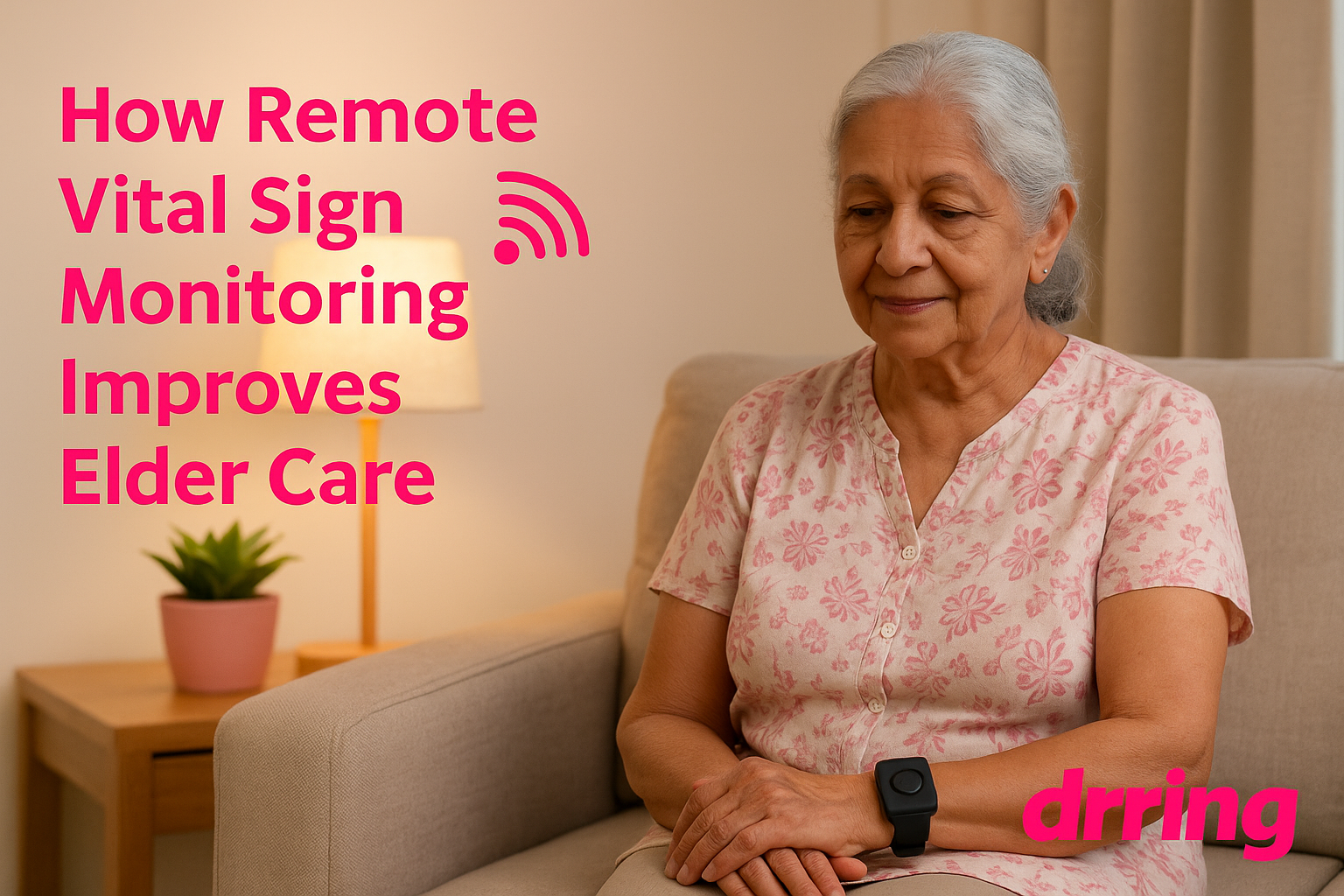
If you’ve ever cared for an aging parent or grandparent, you know the silent worry that sits in the back of your mind.
- Are they okay right now?
- Did they sleep well?
- Are their vitals normal today?
Most elders don’t share discomfort until it becomes serious. Many don’t want to “trouble” their children. And families, especially those living in different cities, are left hoping everything is fine.
This is exactly where remote vital sign monitoring is changing the future of elder care, not just in India, but globally.
Why Monitoring Matters More Than Occasional Checkups
Traditional elder care depends on:
-
Periodic doctor visits
-
Manual tracking of vitals at home
-
Elders reporting symptoms voluntarily
But health doesn’t follow a schedule.
Blood pressure fluctuates, heart rate changes, sleep cycles shift, and stress sometimes creeps in silently.
Remote monitoring captures these trends continuously, allowing doctors and families to see problems before they turn serious.
Something as subtle as:
-
Rising resting heart rate
-
Reduced daily steps
-
Disturbed sleep
-
Irregular breathing patterns
…can signal early infection, dehydration, stress, cardiac risk, or medication side-effects.
A doctor getting this data early can intervene early — and that changes everything.
Why This Is So Important for Seniors
India carries one of the world’s highest burdens of:
-
Hypertension
-
Diabetes
-
Heart disease
-
Stroke
-
Chronic pain
-
Post-surgery mobility issues
Most of these conditions benefit hugely from consistent, low-effort monitoring.
Families don’t need to ask elders to measure vitals every day.
Elders don’t feel nagged or burdened.
Wearable monitoring brings a sense of dignity and independence while still keeping everyone informed.
Peace of Mind for Families
Every family caring for an elder fears the same thing:
“What if something happens and no one knows?”
Remote monitoring reduces this fear by offering:
✔ Daily health trends
✔ Early-warning alerts
✔ Notification to caregivers or family
✔ SOS emergency button (in devices like DrRing)
Even if you’re far away, you still feel connected to your parent’s day-to-day wellbeing.
Supporting Home Nurses and Doctors
Remote vital data gives professionals what they need to make better decisions:
-
Home nurses no longer have to maintain manual logs
-
Doctors can see long-term patterns instead of one-off readings
-
Alerts help identify high-risk situations early
-
Post-operative care becomes safer and more predictable
For many seniors recovering after a fall, surgery, or hospitalization, remote monitoring becomes the bridge that keeps them stable at home.
Reducing Unnecessary Hospital Visits
In India, elders often get admitted “just to be safe.”
But many hospitalizations can actually be prevented by:
-
Monitoring vitals daily
-
Spotting anomalies early
-
Adjusting medication sooner
-
Enabling remote doctor consultations
Remote monitoring helps families avoid the stress, cost, and risk of hospital infections unless absolutely necessary.
How DrRing Brings It All Together
DrRing’s monitoring ecosystem is built around simplicity — designed specifically for Indian elders.
⭐ Easy-to-wear device
⭐ Long battery life
⭐ Smart monitoring of activity, stress, sleep
⭐ SOS emergency button
⭐ Alerts for families
⭐ Works without complicated setup
It allows seniors to continue living independently, while giving families confidence that help is always one tap away.
The Future of Elder Care Is Preventive
Remote monitoring is not about replacing caregivers — it’s about empowering them.
- Elders stay active and independent.
- Families feel connected and reassured.
- Doctors act earlier, not later.
- And emergencies receive faster, more informed response.
India is entering a new era of preventive elder care, and remote vital sign monitoring is becoming the backbone of this shift.
Resources
-
WHO Healthy Ageing Report
-
NITI Aayog Healthcare Monitoring Framework
-
Journal of Geriatric Medicine – Wearables in Preventive Care
#ElderCare #RemoteMonitoring #SeniorHealth #HomeCare #DrRing #MedicalAlertDevice #AgeTech #HealthyAgeing
Leave a Reply