
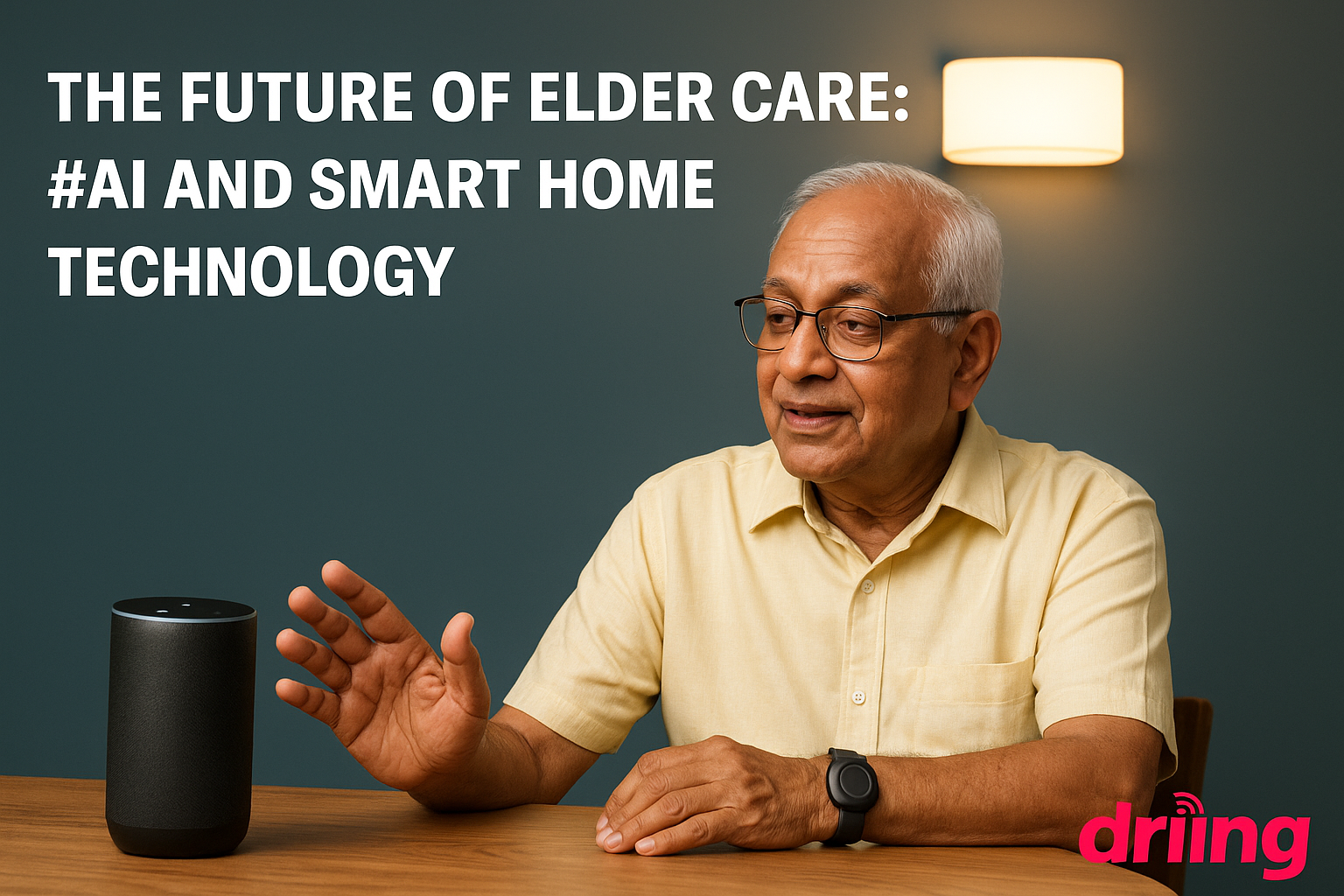
As India’s senior population grows, families are facing a new reality.
They want their parents to stay independent — but also safe.
They want dignity for their elders — but also early warnings when something isn’t right.
And most importantly, they want a system that supports them emotionally and practically.
The good news?
AI and smart home technology are redefining elder care in ways we could only imagine a few years ago.
And 2025 onward will bring even bigger shifts.
Here’s a look into what the near future holds — and how it will completely transform how seniors live at home.
1. AI Will Predict Problems Before They Happen
This is the most significant change in elder care.
For decades, care has been reactive — we act only after something goes wrong.
But AI is flipping that model.
Using daily data like:
-
sleep quality
-
vitals
-
walking speed
-
bathroom patterns
-
stress levels
-
activity trends
-
balance stability
AI can detect micro-changes that humans often miss.
This helps predict:
✔ risk of falls
✔ early signs of infections
✔ abnormal heart patterns
✔ worsening chronic conditions
✔ medication side effects
DrRing’s upcoming AI engine is being built around this principle — allowing families to intervene before an emergency happens.
2. Smart Homes Will Become Safety Nets
Indian homes are upgrading fast.
And smart devices are becoming elder-friendly.
Here’s what 2025 homes will look like for seniors:
⭐ Motion sensors that detect unusual inactivity
If an elder hasn’t moved for too long, the system checks in automatically.
⭐ Contactless fall detection (radar-based)
No cameras. No invasion of privacy.
Just safe, silent monitoring.
⭐ Voice-assisted emergency requests
“Help me,” “Call my daughter,” “I feel dizzy” — all handled by integrated systems.
⭐ Automatic night lighting
Smart lights that turn on the moment a senior stands up at night.
⭐ Door / window sensors
Helpful for seniors with dementia or wandering tendencies.
⭐ Smart medication reminders
AI detects if medicine adherence is dropping and alerts caregivers.
The best part?
Most of these technologies run quietly in the background, preserving dignity.
3. Wearables Will Become Smaller, Softer and More Powerful
The future of wearables isn’t bulky watches or complex screens.
Instead, we’re moving toward:
-
lightweight pendants
-
soft wristbands
-
sensor patches
-
clothing-integrated sensors
With 30–45 days battery life, automatic updates and stress-free usage.
Devices like DrRing already reflect this simplicity — one button, long battery, WhatsApp alerts — and the next phase will bring even more intelligence into these compact devices.
4. Families Will Use AI Dashboards, Not Guesswork
Instead of calling parents 5 times a day to check if they’re okay, families will use:
✔ WhatsApp-based summaries
✔ AI-generated wellness reports
✔ Simple green / yellow / red indicators
✔ Alerts only when necessary
No complicated apps.
No overwhelming charts.
Just meaningful insights in everyday language.
This shift reduces stress for families and brings peace for seniors who dislike being constantly checked on.
5. Personalised Health Insights for Every Senior
AI doesn’t give “one-size-fits-all” recommendations.
Instead, it learns:
-
how your parent walks
-
what normal sleep looks like for them
-
their typical stress pattern
-
their daily routine
-
what triggers risk
This means the system won’t alert unnecessarily.
But when it does alert — it’s accurate and meaningful.
6. Hybrid Care Models: Tech + Humans Working Together
Technology cannot replace human care.
But it can strengthen it.
The future of elder care will combine:
⭐ Wearables (DrRing)
⭐ Smart home sensors
⭐ Remote health teams
⭐ On-site caregivers
⭐ 24/7 command centers
Imagine a scenario:
A fall is detected →
AI analyses location + vitals →
Command center calls →
Family is notified →
On-site caregiver or society security is dispatched.
This is the model India is moving toward — integrated, quick and hyperlocal.
7. Emotional Wellbeing Will Become as Important as Physical Safety
AI will help seniors:
-
stay connected
-
avoid loneliness
-
maintain routines
-
reduce unnecessary stress
-
receive reminders from familiar voices
-
enjoy personalised audio assistance
The line between “health tech” and “companionship tech” will blur — and that’s a good thing.
Because healthy ageing is not just about the body. It’s about the heart and mind too.
The Future Is Clear
Your parents and grandparents won’t need complicated apps or dozens of medical devices in the future.
Their home will understand them.
Their wearable will protect them.
AI will guide them.
A support team will surround them.
And families will feel connected — even from miles away.
This is the future of elder care.
And it’s beginning right now.
Resources
-
WHO Smart Ageing Blueprint
-
MIT AgeLab — Future Technologies for Seniors
-
NITI Aayog — Tech for India’s Ageing Population
#FutureOfElderCare #SmartHomeTech #AIinHealthcare #DrRing #SeniorSafety #AgeTechIndia #RemoteMonitoring
Leave a Reply Cancel reply