
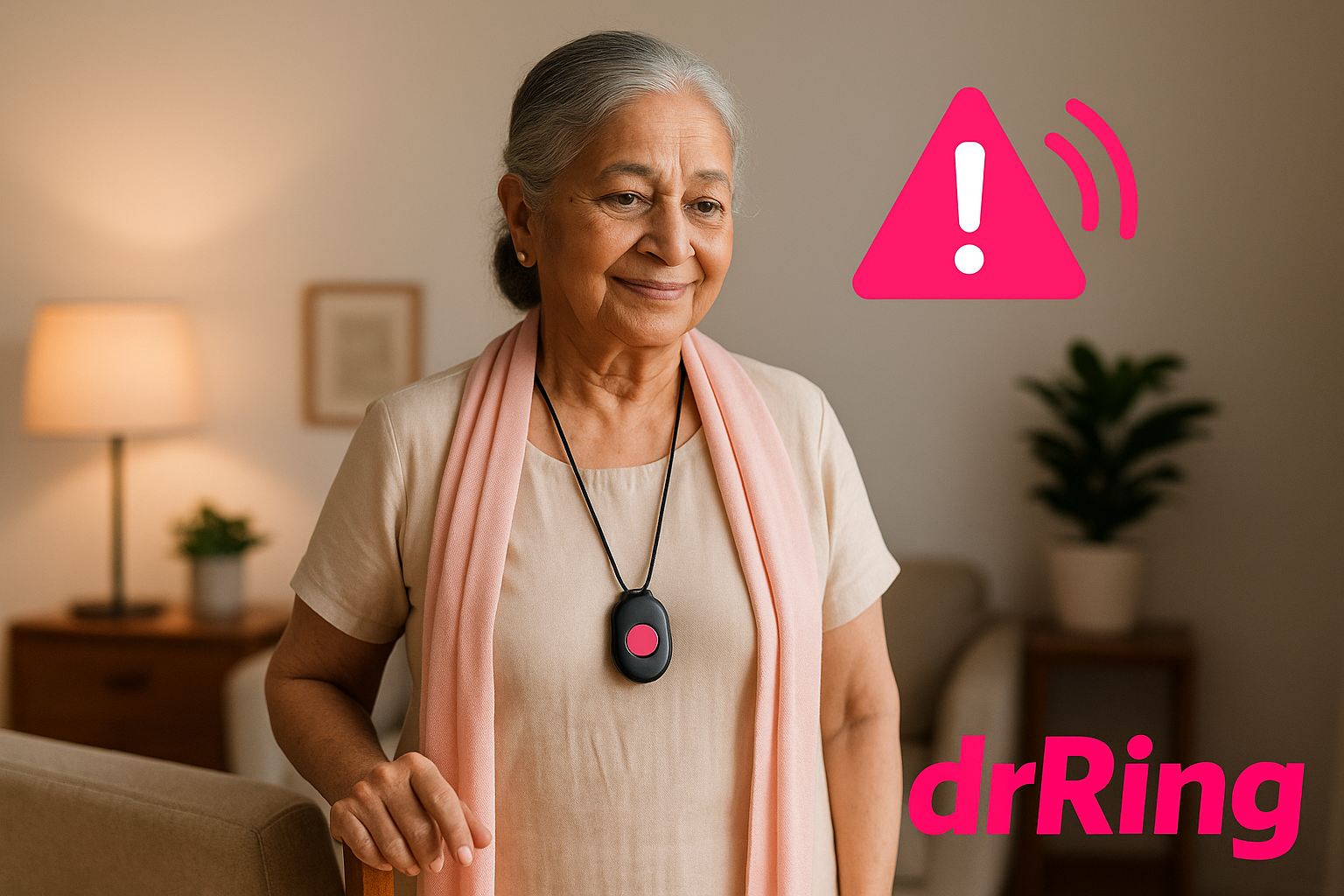
The Role of Wearables in Fall Detection for Seniors
If you speak to any family caring for an elder, one worry always comes up first — “What if they fall?”
A fall may look like a small accident from the outside, but for seniors, it can change life overnight. A slip in the bathroom, a loss of balance during a morning walk, or dizziness while standing up… these moments are unpredictable and often happen when elders are alone.
This is exactly why wearable fall detection devices are becoming one of the most important elder-care technologies in India.
Why Falls Are So Dangerous for Seniors
As people get older, their bodies simply don’t recover the same way:
-
Bones become weaker
-
Reflexes slow down
-
Muscles lose strength
-
Balance becomes unstable
-
Medications may cause dizziness
Even a small fall can lead to:
-
fractures
-
head injuries
-
long hospital stays
-
loss of confidence
-
reduced mobility
But what makes falls truly dangerous is something else — delay in help.
Most elders hesitate to call for help. Some cannot reach their phone. Some are in shock. Some faint.
This delay often increases complications.
A wearable fall detection device removes this delay completely.
How Wearable Fall Detection Works
Modern wearables use motion sensors (accelerometers + gyroscopes) to understand:
-
sudden downward movement
-
strong impact
-
lack of motion after the fall
When the pattern matches a likely fall, the device can:
✔ Trigger an automatic alert
✔ Send the location
✔ Notify family instantly
✔ Or alert a command centre
Nothing needs to be pressed manually — the device acts on its own.
This makes it extremely valuable for elders who:
-
live alone
-
have balance issues
-
have vertigo, neuropathy, or low BP
-
walk outdoors
-
are recovering after surgery
-
have had past falls
Why Wearables Are Better Than Phones
Families often assume, “My parents carry their phone… they’ll call us if something happens.”
But here’s the reality:
-
Elders don’t always keep the phone on them
-
Phones slip from hand during a fall
-
Touchscreens are hard to use in panic
-
Phones may be charging in another room
-
Some elders still avoid smartphones
A wearable, on the other hand:
✔ stays attached
✔ doesn’t need unlocking
✔ works with one tap
✔ has automatic detection
✔ has longer battery life
It’s simply more reliable for emergencies.
Restoring Confidence for Seniors
Falls don’t just injure the body — they affect the mind.
Many elders become scared of walking alone after one accident.
They reduce movement, avoid social interactions, stop exercises, and lose independence.
A fall detection wearable helps them regain confidence:
“Even if something happens, help will reach me.”
This mental reassurance keeps them active — which is extremely important for long-term health.
Why This Matters Even More in India
India’s senior population is growing rapidly.
At the same time:
-
bathrooms often have slippery tiles
-
many homes lack grab bars
-
medication-induced dizziness is common
-
elders remain highly active
-
chronic conditions increase fall risk
Wearables bridge the gap between independence and safety.
Where DrRing Fits In
DrRing takes fall detection beyond just sensors:
⭐ SOS button for manual emergency alerts
⭐ Real-time location sharing
⭐ Worldwide alerts for families
⭐ Designed to be simple for Indian elders
⭐ Long battery life
⭐ Works indoors and outdoors
The idea is not just detecting a fall — it’s ensuring fast, reliable response.
The Future of Fall Detection
We are entering a new era where:
-
AI will detect unusual walking patterns
-
devices will predict fall risk in advance
-
vitals + movement + stress will combine for early alerts
-
smart homes will integrate with wearable safety
And all of this will make aging safer, more independent, and more dignified.
Resources
-
CDC Fall Statistics
-
India Geriatric Society – Fall Risk Guidelines
-
Journal of Senior Mobility & Balance Disorders
#FallDetection #ElderCare #WearableTech #SeniorSafety #AgeTechIndia #DrRing #EmergencyAlert
Leave a Reply Cancel reply