
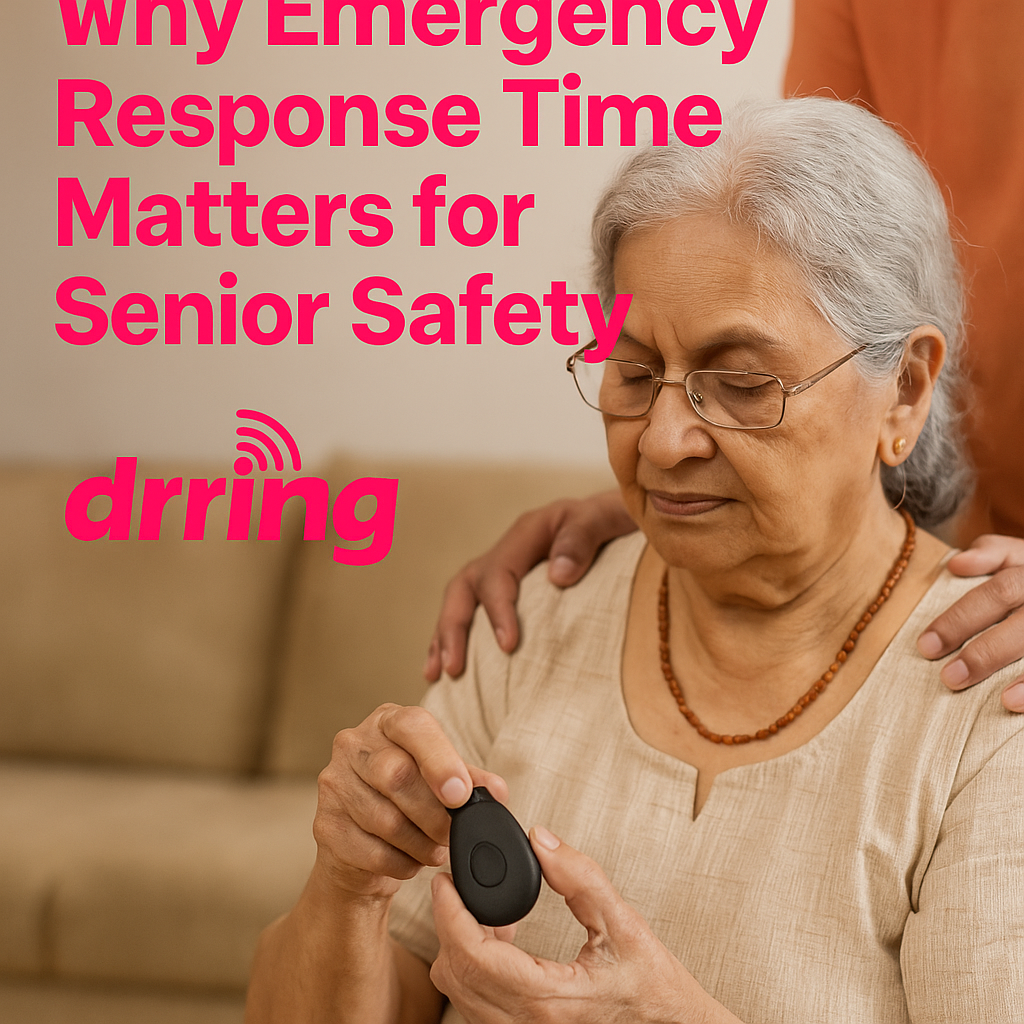
When it comes to senior safety, one factor makes the biggest difference between a manageable situation and a life-threatening emergency:
Time.
How quickly help arrives — not just who comes or what treatment is given — often determines the outcome.
For families caring for elders, especially those living alone or with health conditions, emergency response time isn’t just a technical metric. It’s deeply personal. It’s the difference between fear and confidence, between uncertainty and peace of mind.
Let’s explore why those first few minutes matter so much.
1. The Body Changes Rapidly During an Emergency
As we age, our bodies respond differently to stress, injury and sudden health issues.
In seniors:
-
Blood pressure drops faster
-
Breathing becomes unstable quicker
-
Confusion or fainting is more common
-
Bones are more fragile
-
Heart rhythm changes can escalate rapidly
A delay of even 5–10 minutes can significantly worsen the condition.
This is why “I’ll call in a few minutes” or “They’ll get up on their own soon” can be dangerous assumptions.
2. Falls Become More Serious When Help Arrives Late
A fall may look simple, but for seniors it’s often the beginning of a cascade of complications.
If a senior falls and remains on the floor for a long time:
-
muscle tissue begins to break down
-
dehydration sets in
-
blood circulation is affected
-
the risk of pneumonia increases
-
psychological trauma increases
-
chances of long-term mobility issues rise
This condition is known medically as “long-lie time.”
A fast emergency alert can prevent nearly all of these complications.
3. Many Seniors Can’t Reach Their Phone During an Emergency
This is one of the biggest challenges in Indian homes.
Emergencies rarely happen when elders are sitting upright with their phone in hand. Most incidents occur when:
-
bathing
-
walking
-
using the toilet
-
standing up from bed
-
getting dressed
-
reaching for an object
Phones fall.
Phones are kept in another room.
Touchscreens become unusable when hands are shaking.
That’s why the speed of pressing an SOS button on a wearable becomes life-saving — it takes one second and doesn’t require moving.
4. Panic Slows Thinking — A Simple Button Speeds Action
During a medical or physical emergency, seniors often:
-
panic
-
freeze
-
forget whom to call
-
get confused
-
lose grip strength
-
feel disoriented
These are normal physiological responses.
A medical alert device removes complexity from the moment that matters most:
✔ No unlocking
✔ No swiping
✔ No typing
✔ No searching for contacts
Just one button.
The simpler the action, the faster the help.
5. For Families Living Apart, Response Time Is Everything
Most Indian families no longer live under the same roof.
Kids may be in:
-
another city
-
another country
-
or simply at work all day
In these cases, fast emergency alerts are the only way to ensure families know the moment something goes wrong.
Systems that notify families instantly — or connect to a 24/7 command center — remove the uncertainty that often delays help.
6. Psychological Safety Improves Behaviour
When seniors know they can get help fast, they:
-
walk more confidently
-
stay more active
-
avoid unnecessary fear
-
feel safer at home
-
recover better after surgery
When families know help will reach quickly, they:
-
stop worrying constantly
-
reduce over-calling “just to check”
-
build trust with the elder
-
support independence instead of restricting it
Fast response time strengthens both safety and dignity.
7. How Smart Devices Like DrRing Improve Response Time
DrRing is designed to eliminate delays:
⭐ Instant one-touch SOS alerts
⭐ WhatsApp notifications to family
⭐ GPS location sharing
⭐ Fall detection for automatic alerts
⭐ Quick callback from support teams (if enabled)
⭐ Works indoors and outdoors
Most emergencies don’t wait.
DrRing’s purpose is to make sure families don’t have to wait either.
8. Emergency Time Is Measured in Seconds — Not Hours
The old belief — “We’ll find out if something goes wrong” — no longer works for an aging population.
Modern elder-care solutions are shifting the mindset to:
“We’ll know immediately if something goes wrong.”
And this shift is saving lives.
Whether it’s a fall, a sudden drop in blood pressure, chest pain, dizziness or confusion, seconds matter.
Final Thought: Fast Help Is Kindness in Action
We all love our parents deeply.
But love alone doesn’t always translate to safety.
Systems, tools and preparedness do.
A medical alert device is not just a gadget.
It’s a promise — that no elder should face an emergency alone.
Resources
-
CDC Fall Injury Response Report
-
WHO Ageing and Emergency Preparedness Framework
-
Journal of Emergency Medicine – Response Time Outcomes
#EmergencyResponse #SeniorSafety #FallDetection #DrRing #ElderCareIndia #MedicalAlertDevice #AgeTech
Leave a Reply